

Pharmacy operations often include pressure to secure controlled substances while maintaining the same level of efficiency. Traditional security measures, like passwords, PIN codes, and physical keys, all have inherent vulnerabilities that create compliance risks. Passwords can get shared between shifts, keys can get lost or duplicated, and PINs are often forgotten or written down where anyone can find them.
The next evolutionary step is biometric authentication, which is currently transforming medication security. Biological identifiers, such as fingerprints and facial recognition, enhance the security, efficiency, and accountability of pharmacies’ medication management systems. They also satisfy the Board of Pharmacy requirements and DEA expectations.
What Is Biometric Authentication in Pharmacy?
Biometric authentication uses physical characteristics to verify identity. Biometric systems rely on who you are rather than what you know or have, such as a key or a password.
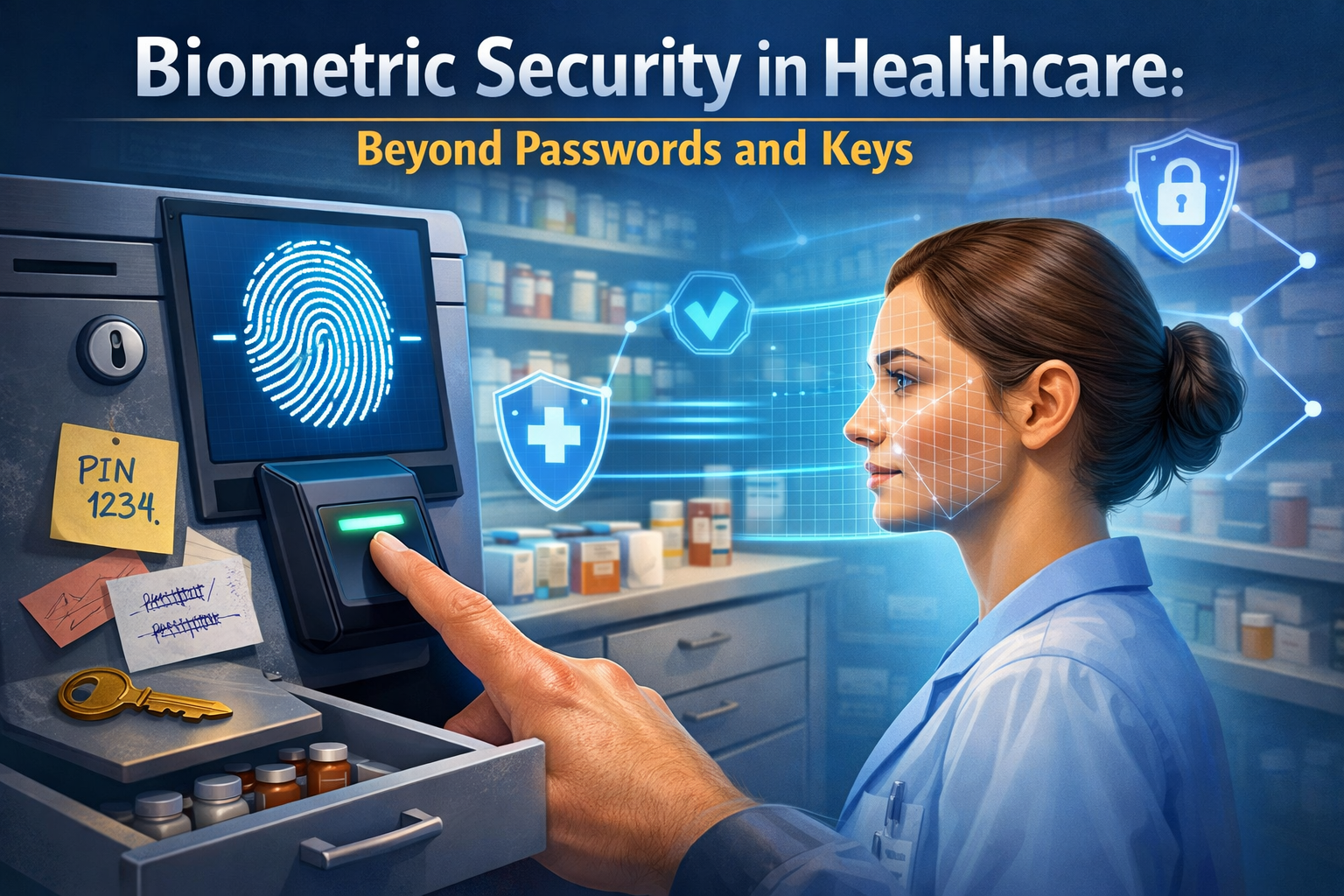
In pharmacy settings, biometric systems typically use fingerprint scanning or facial recognition in dispensing cabinets and inventory management systems. When a pharmacist or pharmacy technician accesses controlled substance storage, the system verifies their identity, grants access to only authorized personnel, and creates an immediate audit trail documenting every transaction.
The technology is nothing new, and it has been maturing significantly over the past decade. Modern pharmacy-grade biometric sensors are designed to operate reliably in demanding dispensing environments and to integrate seamlessly with pharmacy management systems.
Preventing Drug Diversion in Pharmacy Operations
Drug diversion is one of the most significant challenges in pharmacy operations. Misappropriation of controlled substances creates patient safety risks, regulatory exposure, and potential DEA sanctions that can threaten pharmacy license operations.
Biometric authentication eliminates several of these diversion pathways. When inventory access events require physical verification of identity, staff members can’t create credentials or access medications under another person’s authorization. The technology creates non-repudiation, which means that every transaction is tied definitively to a specific pharmacist or technician.
Automated systems equipped with biometric readers generate comprehensive audit trails that support inventory reconciliation and forensic investigations when issues arise. Pharmacy managers can track these access patterns, identify anomalies in controlled substance handling, and respond quickly to potential diversion incidents before they become problems.
Strengthening Controlled Substance Compliance
DEA and State Board of Pharmacy requirements for controlled substance documentation are always changing. Most of the time, pharmacies are required to maintain records and audit trails related to their inventories.
Biometric systems help provide the evidence needed in regulatory compliance demands. Every access event is time-stamped, attributed to a verified individual, and stored in a tamper-resistant digital record. Whenever authorities need to inspect the pharmacy, systems can provide a precise record demonstrating proper chain of custody and individual accountability for every controlled substance.
Biometric systems also support verification requirements. When a two-person verification is required for controlled substance destruction or inventory counts, biometric systems require their own sequential authentication. The records reduce documentation inconsistencies that can trigger audits.
Streamlining Pharmacy Workflows
Security measures should enhance efficiency, which is why fingerprint and facial recognition systems are becoming the new standard. Biometric authentication eliminates time spent typing passwords or locating keys. High-volume pharmacies can save significant time, which can be redirected to clinical activities and patient consultations.
Biometric systems also reduce administrative burden for pharmacy managers. Staff members no longer generate help desk tickets for forgotten passwords or require supervisor intervention for access issues.
Some of the key workflow benefits include:
- Faster access to controlled substance inventory during high-volume dispensing periods
- Elimination of password management burden for pharmacy staff
- Reduced administrative time for credential resets and access troubleshooting
- Seamless shift transitions without credential handoffs
Implementation Considerations for Pharmacy Operations
If you’re in the market for biometric security, you’re probably already aware that it requires thoughtful planning. Follow these steps for successful implementation:
Step 1: Conduct A Compliance Gap Assessment
Review current controlled substance access protocols against DEA and the Board of Pharmacy requirements. Take note of any credential-sharing practices, key control issues, or audit-trail gaps to establish a baseline for compliance data.
Step 2: Evaluate Integration Requirements
Map your current pharmacy management system and inventory software. Most of the time, biometric solutions already integrate with your dispensing workflow and generate reports compatible with regulatory reporting requirements, but double-check with your provider.
Step 3: Develop a Staff Training Plan
Create training that covers both technical operation and compliance rationale. Ensure pharmacists and technicians understand how biometric authentication works.
Step 4: Establish Enrollment and Backup Protocols
Define enrollment procedures for new hires and staff. Document alternative authentication methods for equipment malfunctions that maintain audit trail integrity.
Step 5: Set Monitoring and Reconciliation Schedules
Set up daily controlled substance reconciliation using biometric audit data. Define escalation procedures when access patterns suggest diversion or discrepancies.
People Also Ask
How does biometric data get stored and protected in pharmacy settings?
Pharmacy and biometric systems have encrypted mathematical templates instead of relying on fingerprint images or photographs. The templates cannot be reverse-engineered, which means enhanced privacy protection and audit functionality.
What happens if a biometric scanner fails during pharmacy operations?
Most biometric systems already include backup authentication methods and override procedures for dispensing access during malfunctions while preserving audit documentation for regulatory compliance.
Do biometric systems satisfy DEA audit requirements?
Biometric authentication is perfect for DEA compliance because it provides individual accountability and detailed audit trails for every controlled substance access. Though its efficiency and compliance overall often depend on proper implementation and documentation procedures.
How do pharmacies handle biometric enrollment for relief pharmacists?
Enrollment processes can accommodate enrollment for new and temporary staff through registration links to biometric templates. These include temporary access permissions with appropriate supervision requirements.
Conclusion
Biometric authentication is now representing a fundamental shift in how pharmacies approach controlled substance security. Pharmacy operations are secure environments that now easily replace compromised passwords and keys with unique biological identifiers, all while satisfying DEA requirements and Board of Pharmacy expectations. These new technologies transform authentication from a workflow obstacle into a seamless process.
The question for pharmacy managers is no longer whether to adopt biometric security but when and how. Pharmacies that move forward more quickly will gain immediate benefits for next-generation medication management capabilities.
Phoenix offers automated medication management solutions featuring biometric security, secure inventory control, and intuitive web-based portals that give pharmacies complete visibility and control over controlled substance dispensing. Our systems are designed for simplicity and configurability, backed by 24/7/365 support to ensure your pharmacy operations are extraordinary, safe, and smooth.