

Staff are arguably the most important element of any care facility. Too few staff members or staff that are overworked and overburdened can lead to gaps in care that affect patients. While the entire healthcare industry faces a staffing crisis, long-term care facilities face especially high staffing issues. According to the 2024-2025 Nursing Home Salary and Benefits Report turnover rate among CNAs at over 42%, LPNs at over 35%, and RNs at over 36% in 2025. Fixing the staffing issue isn’t as simple as “hire more people,” so facilities need to find ways to help current staff accomplish more without burning out. Medication administration, a repetitive task that requires attention to detail, is one area where automation has a clear impact.
How Understaffing Overworks Remaining Care Teams
When staff leave and those positions go unfilled, the workload is redistributed onto the remaining staff. This redistribution can look like extended shifts, mandatory overtime, or higher resident-to-staff ratios. The added workload shows up across the long-term care ecosystem: assisted living turnover ran nearly 35% in 2025. In 2025, nursing homes averaged 3.73 total nursing hours per resident day, below the 4.1-hour benchmark identified as necessary for adequate care, meaning nurses are stretched thin.
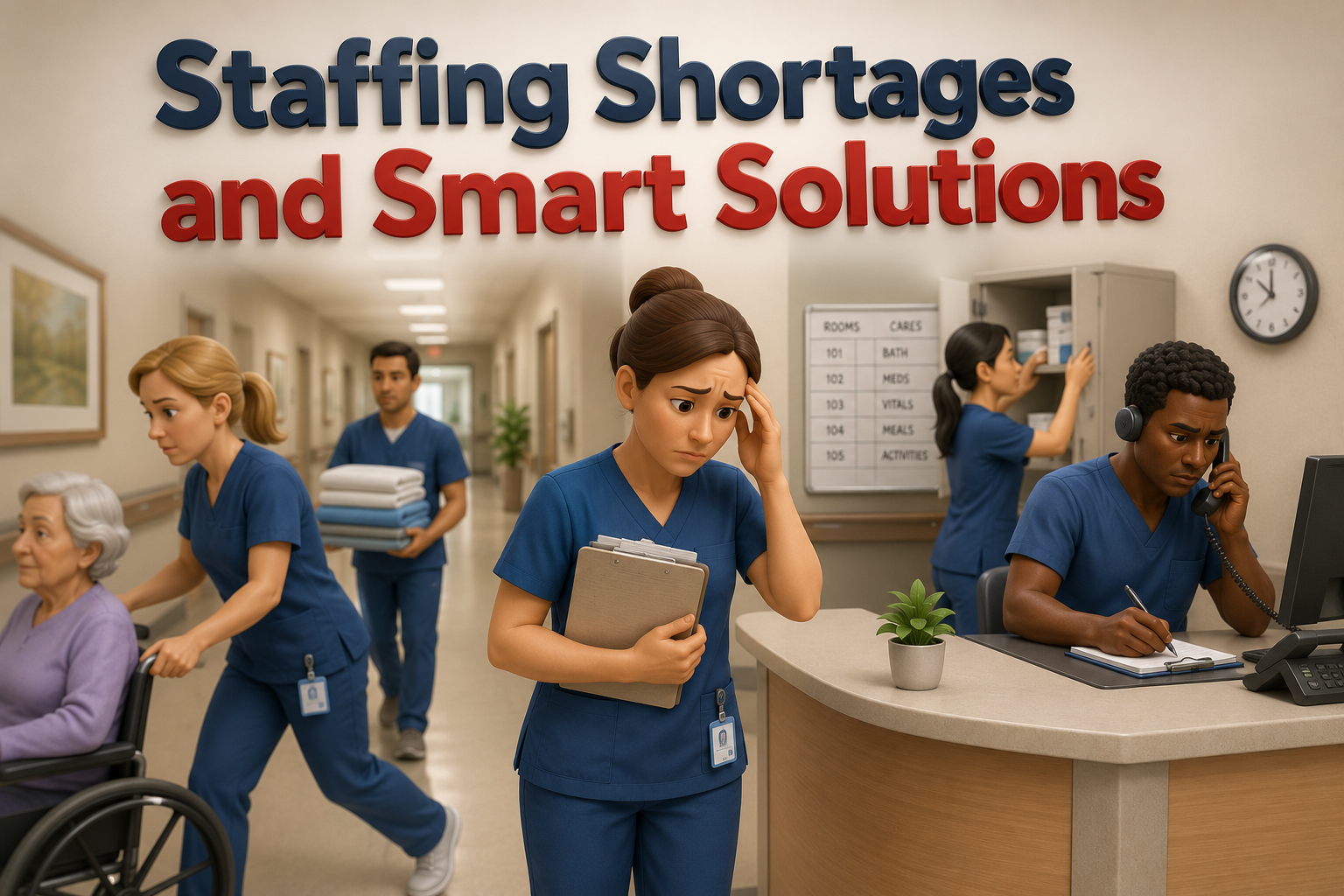
The effects of understaffing significantly impact other roles, too. CNAs provide up to 90% of resident care yet comprise only a third of nursing home staff and have the highest turnover rate of all healthcare staff roles in nursing homes. Since most states lack a mandated CNA-to-resident ratio, there’s often no regulatory ceiling on how thinly spread staff can be before care quality starts to lag.
Across the different roles and settings of healthcare facilities, it’s not realistic to quickly add headcount in hopes of combatting the staffing crisis. The more practical solution is reducing the manual workload on the existing staff, starting with medication administration.
Why Medication Administration Is a Prime Target for Relief
Medication administration (or “med pass”) is a task repeated multiple times daily per resident in long-term care facilities. Med pass can quickly become a time-intensive task, requiring manual counts, documentation, retrieval, and discrepancy reconciliation between on-hand and recorded medications. In one study, interruptions occurred in 79% of observed med pass rounds and accounted for 11.5% of the time spent accomplishing the task.
Med pass requires a large time requirement, and it’s compounded when nurses are unfamiliar with residents and required to manually look up each residents’ required medications for each round. High turnover rates in nursing homes and LTC facilities mean that a tremendous amount of staff time is spent on completing medication administration each day.
One peer-reviewed study found a measurable (though moderate) correlation between the burden of administrative documentation and nurse burnout, suggesting that repetitive task load contributes to staff turnover. Automating tasks that require high levels of documentation—such as medication administration—is an easy way to reduce repetitive workload and staff burnout.
What Automated Medication Management Changes for Care Teams
Incorporating automated medication management and administration systems allow LTC facilities to directly target time-intensive and repetitive tasks and reduce the workload on staff. Rather than a nurse needing to manually complete each step in the process, automation can handle most of the tedium, reducing the workload on nurses and staff. Some of the processes automated medication management can handle include:
- Medication counts and discrepancy reconciliation. Barcode or biometric verification confirms the right medication and resident at the point of dispensing, while real-time inventory tracking flags discrepancies as they happen. Instead of nurses manually reconciling on-hand medications against recorded counts, the system catches mismatches automatically.
- Documentation. Verification and dispensing events are automatically logged as they happen, cutting down the manual load of documentation that can contribute to nurse burnout.
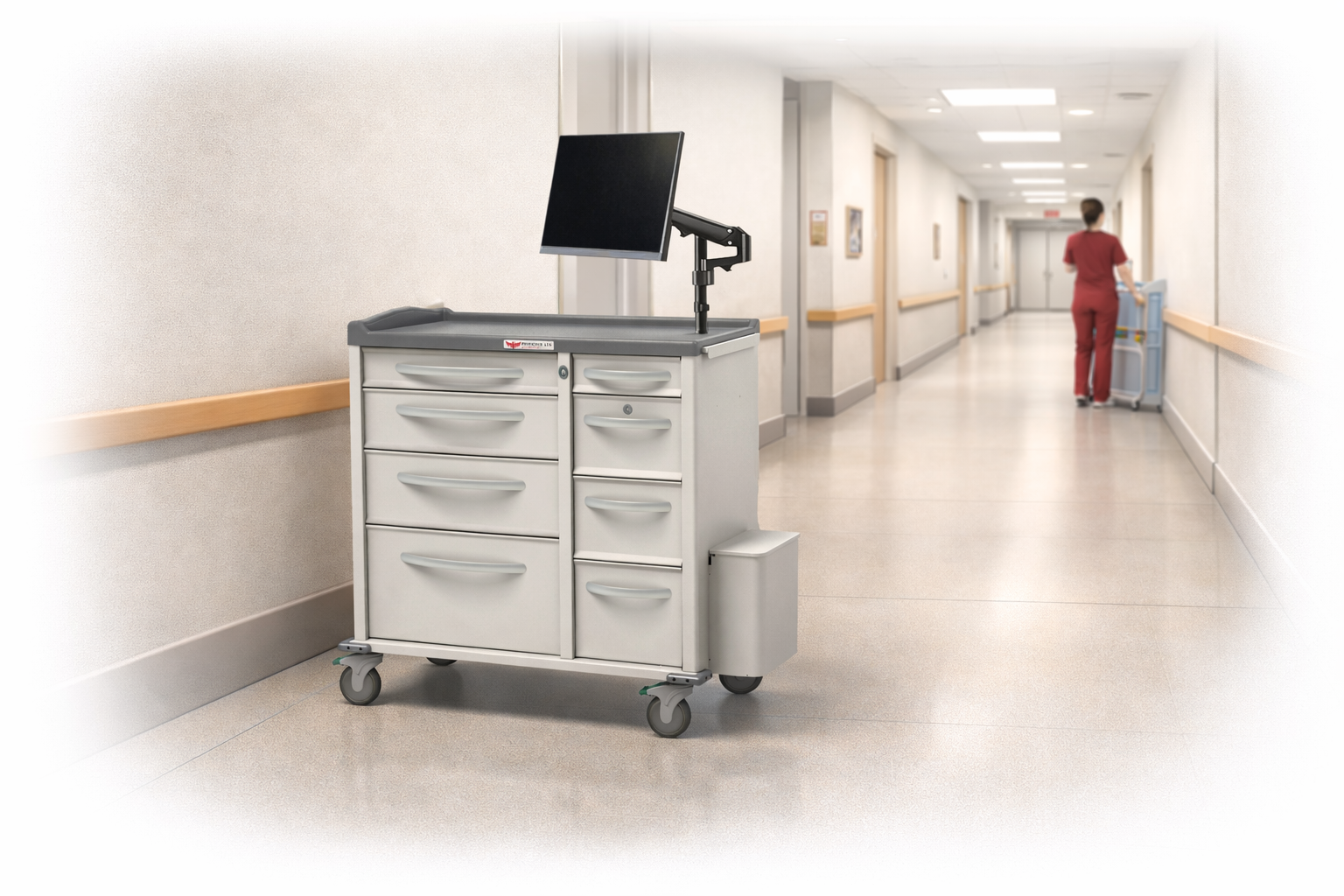
- Medication retrieval. Automated dispensing cabinets store medications in labeled compartments that make it easy for staff to identify the correct medication and quantity, rather than requiring nurses to manually search through carts or storage for the right item. This removes the searching and double-checking that can stretch out retrieval time. A peer-reviewed study monitoring two long-term care facilities found this organized approach cut medication retrieval time by 71% and reduced unscheduled medication delivery costs by 96%, saving facilities roughly $8,900.
- Unfamiliarity with residents. When there’s a new staff member on the team in charge of medication administration, the lack of familiarity with residents can pose an issue and take up a lot of time as the staff member manually looks up each resident’s medication and dosage. Automating this process eliminates the manual searching, giving the nurse clear information on who receives what medication regimen and what it entails.
Medication administration automation helps remove the repetitive and error-prone burden of manual administration, giving nurses more time for other tasks and reducing the amount of work that goes into this daily process. The automation doesn’t replace clinical judgment or mean that facilities need fewer nurses, it just changes what on-staff nurses spend their time on.
The Payoff: Safety, Retention, and Staff Confidence
Automating certain processes can offer more than time savings; eliminating unnecessary time spent on manual tasks can help potentially reduce burnout and improve retention among nurses and other LTC staff. Fewer manual steps means less frequent errors, which may improve compliance and decrease the possibility for audits. Among US healthcare leaders, 88% say automating repetitive tasks is crucial for addressing staff shortages. Forty-four percent of US healthcare leaders reported that they planned on implementing automation for workflow prioritization in the near future.
Investing in reliable tools, like Phoenix LTC’s StatSafe cabinets and kiosks, can give staff more confidence during medication administration and reduce the time spent on the task, freeing them up for other duties.
Conclusion
Solving the current healthcare staffing crisis requires more than recruiting more people; the solution entails giving current staff tools that can help remove unnecessary burdens from their everyday workflows.
Phoenix LTC’s automated medication management systems are built to address this exact problem. StatSafe implementation has been shown to reduce errors and staff labor during medication administration, while also shortening the time the task takes nurses to complete. StatSafe carts and kiosks are available in a wide range of configurations, so facilities can choose the one that’s most suitable for their use case.
Frequently Asked Questions
How does automation help with nursing home staffing shortages?
Automated medication management systems reduce the time nurses spend on manual, repetitive tasks like pill counts, hand documentation, and medication retrieval. This allows facilities to maintain quality resident care with existing staff levels rather than depending solely on hiring additional nurses to close coverage gaps.
What percentage of a nurse’s shift is spent on medication administration?
Medication administration, or “med pass,” is one of the most time-intensive recurring tasks on a nursing shift, repeated multiple times daily per resident. One study reported that interruptions occur in roughly 79% of medication rounds in long-term care settings.
Does automated dispensing actually reduce nurse burnout?
Reducing repetitive administrative burden is correlated with lower burnout and turnover in long-term care, separate from wage or staffing ratio improvements alone. Automated dispensing removes manual counting and documentation steps that contribute to time pressure and error-related stress during medication rounds.
How much time can automated medication dispensing save in long-term care facilities?
A peer-reviewed study published in the Journal of the American Pharmacists Association found automated dispensing cabinets reduced medication retrieval time by 71%, plus led was attributed to a 96% reduction in unscheduled medication delivery costs at two long-term care facilities.
Does automation replace nursing staff in long-term care facilities?
No. Automated medication management systems are designed to remove repetitive, manual tasks like counting and documentation, not clinical decision-making or resident interaction. Nurses retain full clinical judgment and direct care responsibilities.